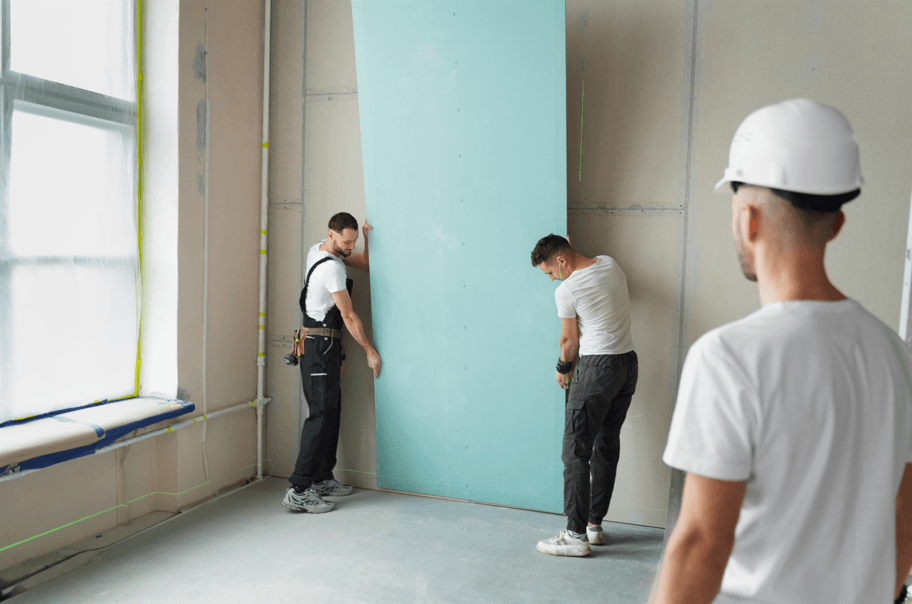
Drywall finishing is one of those construction stages that looks simple from the outside but determines how polished and professional your interior walls will feel for years. Many homeowners only think about paint, yet the real difference between a basic wall and a high end finish comes from how well the drywall is finished underneath. Understanding drywall finish levels and the right techniques helps you avoid visible seams, uneven surfaces, and future repairs.
What Should Homeowners Know Before Starting Drywall Finishing for Smooth Walls?
Before starting drywall finishing, it is important to understand that this process is not just about covering joints. It is about creating a uniform surface that will hold paint and lighting evenly across the entire room. Many homeowners rush this step and end up with visible lines or texture inconsistencies later.
The key is patience and preparation. Every layer of compound must be applied carefully and allowed to dry properly before sanding. Skipping steps or rushing the process often leads to imperfections that become more noticeable once the paint is applied. Working with professionals like Akraba construction ensures the finishing process follows proper standards from start to end.
How Do Professional Drywall Finishing Techniques Improve Wall Quality and Durability?
Professional drywall finishing techniques focus on layering, blending, and smoothing the surface in a controlled process. This ensures seams between panels disappear and the wall looks like one continuous surface. It also improves durability by strengthening joints and reducing the chance of future cracking.
Key techniques used by professionals
- Multiple thin layers of joint compound instead of one thick application
- Feathering edges to blend seams smoothly into the wall
- Proper sanding between each layer for a uniform surface
Understanding drywall finish levels helps homeowners know what quality they are getting. As part of a complete guide to drywall installation, knowing these levels ensures each stage is done correctly. A level 5 drywall finish, for example, provides the highest standard of smoothness, often used in areas with strong lighting or luxury interiors. Choosing the right finish level ensures the wall matches the overall design of the space.
What Tools and Materials Are Essential for Achieving a Professional Drywall Finish?
Using the right drywall finishing tools makes a significant difference in the final result. Many DIY projects fail not because of technique alone, but because of improper or incomplete tools. Professionals rely on a combination of precision tools and quality materials to achieve consistent results.
Essential tools for drywall finishing
- Taping knives in multiple sizes for different applications
- Mud pan for controlled compound handling
- Sanding blocks or pole sanders for smooth finishing
- Joint compound designed for easy application and durability
Important materials to consider
- High quality joint compound for smoother application
- Drywall tape for reinforcing seams
- Primer to prepare the surface for painting
Using the right tools finish drywall work ensures cleaner lines and fewer imperfections. When tools are properly selected and used, the finishing process becomes more efficient and the results more predictable.
How Can Proper Drywall Finishing Prevent Future Cracks and Surface Imperfections?
Proper drywall finishing is not just about appearance. It plays a major role in preventing future structural issues like cracks and uneven surfaces. When joints are not properly sealed or layered, natural building movement can cause visible damage over time.
Benefits of proper finishing
- Reduces risk of cracking at seams
- Improves resistance to daily wear and tear
- Maintains smooth appearance over time
Understanding drywall finish levels also helps prevent over or under finishing. Each level serves a purpose, from basic utility spaces to high visibility living areas. Choosing the correct level ensures long term stability and reduces maintenance needs.
Many homeowners overlook this step, but proper finishing acts like a protective layer that supports the entire wall system.
Expert Insight. What Defines High Quality Drywall Finishing in Modern Construction?
High quality drywall finishing is defined by consistency, smoothness, and attention to detail. It is not just about hiding seams but creating a surface that enhances the entire interior design. Lighting, paint quality, and room layout all depend on how well the walls are finished.
A level 5 drywall finish is often considered the highest standard because it eliminates even the smallest surface imperfections. This level of detail is especially important in modern homes where lighting highlights every surface angle.
Experienced professionals like Akraba construction focus on precision at every stage. From selecting materials to applying final coats, each step is carefully managed to ensure a flawless result. This level of workmanship helps homeowners achieve walls that not only look smooth but also perform well over time.
Drywall finishing may seem like a final step, but it is actually one of the most important stages in interior construction. When done correctly, it sets the foundation for every design choice that follows.
Ready for Smooth and Professional Wall Finishing?
If you are planning a renovation or new construction project and want clean, professional walls, proper drywall finishing is essential. Whether you are comparing drywall finishing tools or deciding between different drywall finish levels, expert guidance can make the process easier and more reliable.
To understand more about how projects are handled and the approach used by experienced professionals, you can explore the About Us section where craftsmanship and process are explained in detail. When you are ready to move forward, the Contact Us page makes it simple to schedule a consultation and discuss your project needs.
You can also call 469-409-4249 to speak directly with a professional who can guide you through your drywall finishing options and help you achieve smooth, long lasting walls.